
How to Get Concordia Parish Court Records
For district civil, criminal, family, succession, probate, and minute files, one office controls them all. The Concordia Parish Clerk of Court is the legal custodian for Seventh Judicial District Court records. eClerks LA can point you to participating parish information. Accounts, subscriptions, or image charges may apply. A portal printout helps for reference. It is not automatically a certified court record.
Give the clerk what identifies the file: case number, court, division if known, document name, and approximate date. Say whether the copy should be plain or certified. Verified request channels include eClerks LA, the counter at 4001 Carter Street, Room 5 in Vidalia, phone at (318) 336-4204, and mail to P.O. Box 790, Vidalia, LA 71373. Fax and email count as well. Use those routes only if the office confirms it accepts them. Ask for a current fee quote and turnaround before you send payment.
- Identify the record by case number, division, document type, and date. A caption or party name can help when a number is not available.
- Check eClerks LA for an available index or image route, then note any result details for the clerk.
- Call or visit the Concordia clerk for paper files, older records, public inspection, certification, or a request that the portal cannot complete.
- State the delivery method and ask what payment the office accepts. Mail and carrier costs may be added at actual cost.
- Review the returned copy for the seal, certification, date, and page count when an official use requires proof from the custodian.
Concordia Record Image Limits
The eClerks LA access layer does not promise a complete Concordia Parish court image file. Its help materials cover parish selection, account controls, and subscriptions. Image carts get attention there as well. So does the 72-hour document-download window. The Statewide Portal advertises land, marriage, and civil information. The site adds a Criminal Search tile. Treat these as access tools, not proof that every Concordia filing or image is present.
The eClerks LA help guide walks through the portal workflow and its image-purchase steps. The distinction matters when a docket result lists a filing but no image appears. Ask the Concordia Parish Clerk of Court whether the document can be inspected, copied, or certified. It may also sit in paper or archive storage. Do not assume it is unavailable.
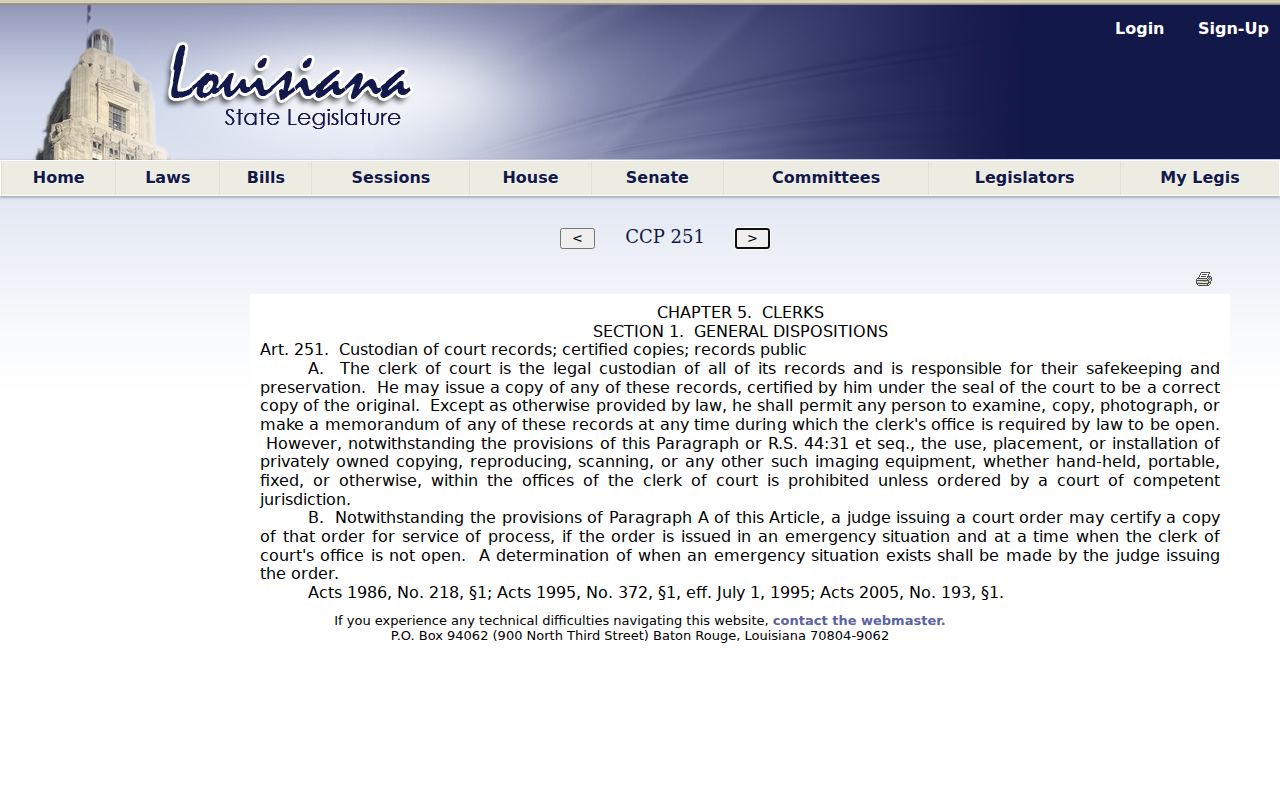
Even when an online image is absent, the statutory custodian rule still points the way to the official record.
Types of Court Records
A Concordia Parish court docket is the running register of events. The file behind it holds the actual pleading, order, judgment, minute entry, transcript, or exhibit. District-court material sits apart from the rest. Vidalia City Court keeps its own records. So does a mayor's court, a justice of the peace, the sheriff, or the district attorney. Asking the right custodian first usually beats a broad name search.
- Civil petitions, answers, motions, notices of setting, judgments, and execution papers.
- Criminal bills, indictments, minute entries, bond records, orders, sentencing material, and appeal filings.
- Family, protective-order, succession, and probate records where public access is permitted.
- Traffic or municipal materials held by the sheriff, district attorney, city court, mayor's court, or justice court instead of the parish clerk.
- Transcripts, which come from the court reporter and are not the same as a docket sheet or minute entry.
Federal Western District records offer a separate route. Concordia belongs to the Alexandria Division, and those federal dockets run through PACER, not the parish clerk's state-court system.
Concordia Court Record Copy Types
A plain copy just reproduces the public document. A certified copy comes from the clerk under the court seal. That is the one to choose when proof matters. An agency, another court, or a formal process needs to know the reproduction matches the official file. A conformed copy, minute extract, exemplified copy, and transcript are all different products. The clerk can explain which is available. A court reporter handles transcript requests.
| Record product | What it establishes | Custodian question |
|---|---|---|
| Portal result or docket view | Reference to case events and available details | Does Concordia expose this case or image online? |
| Plain copy | Reproduction of an available public filing | What is the page count and retrieval charge? |
| Certified copy | Clerk-sealed copy of the official record | Does the requested use require certification? |
| Transcript | Record of testimony or proceeding | Which court reporter and rate apply? |
Note: A certified copy confirms the clerk's record. It does not change a court's order, setting, or legal effect.
Concordia Record Request Details
Concordia Parish publishes no certified-copy form of its own. The request itself does the sorting work. A clear request lets the clerk find the court record without a broad search and quote an accurate estimate. Begin with the 7th JDC court identity. Then add any known division, case number, document title, date, and case caption. Send no more personal information than the record request needs.
- Plain copy
- An available reproduction without clerk certification.
- Certified copy
- A clerk-sealed reproduction used when official proof of the record is needed.
- Minute extract
- A requested extract of court minutes, distinct from a full case file.
- Transcript
- The court reporter’s record of testimony or a proceeding, requested separately from the docket.
Tell the clerk how you want delivery: inspection, pickup, mail, electronic image if available, or another confirmed option. The office quotes fees and turnaround on request, since Concordia publishes no current form or payment-method list.
What a Court Record Contains
Case records tie a case identity to the filings and court actions that follow it. A public interface may show fewer fields than the clerk-held file. Concordia calendar examples show civil numbers in a comma-formatted five-digit style, such as 56,xxx. Criminal examples use a year-hyphen form such as #23-xxxx. Those are observed display patterns. They are not a promised input format.
| Case identity | Court, division, case number, filing date, and the case category available to the record system. |
|---|---|
| Docket or minutes | Chronological filings, settings, hearings, orders, resets, judgments, and disposition language. |
| Pleadings and documents | Petitions, answers, motions, notices, orders, judgments, indictments, or minute material when access is permitted. |
| Setting information | Date, time when posted, division, setting type, judge or ad hoc notation, and a reset note when available. |
| Access status | Redaction, sealing, juvenile confidentiality, or another legal restriction that limits public detail. |
Louisiana's criminal minute-entry statute spells out selected public information for qualifying criminal cases filed on or after January 1, 2020. It does not require every filed image, and it excludes traffic violations.
Concordia Clerk Record Address Check
A commonly cited clerk web address opens an unrelated site. Rely on the state directory or the clerks' association listing instead. The current directory names John F. “Andy” Anders as Concordia Parish Clerk of Court. The court campus and the historic 405 Carter Street courthouse are different reference points. Note the difference. Present-day state-court records go to the current office, not the historic building.
Concordia Parish Clerk of Court
4001 Carter Street, Room 5
Vidalia, LA 71373
(318) 336-4204
When the record is federal, the Western District of Louisiana is the proper source. Its docket system stands apart from the parish's. That separation keeps a federal file from being mistaken for a missing Concordia Parish state file.
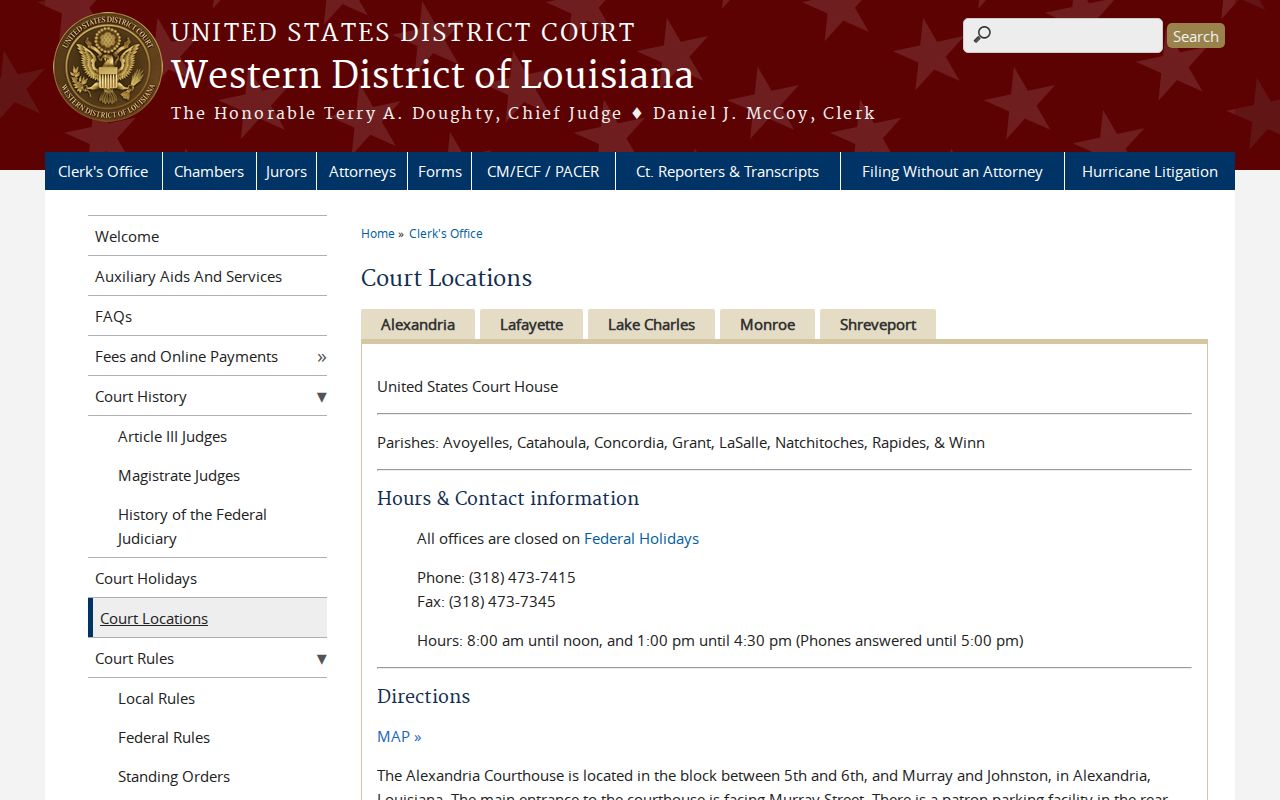
A state docket and a federal docket never share a clerk. The federal courthouse runs its own counter, its own rules, and its own access path for Concordia Parish cases that land there.
Certified Copies and Fees
Louisiana statutes set the amounts below for civil and criminal clerk work. Concordia posts no parish-specific fee sheet. Confirm each figure with the clerk before ordering. Also note that a criminal-history search is a different request from a docket, minute entry, or case-file copy. eClerks subscription and image charges call for a parish-specific check too.
| Item | Statutory amount or rule |
|---|---|
| Civil copy per page | $1.00 |
| Civil certification | $5.00 |
| Civil conformed copy | $3.00 |
| Civil minute entry | $5.00 |
| Criminal copy per page | $1.00, confirm local application |
| Criminal minute extract | $10.00, confirm local application |
The clerk association's statutory references gather the civil and criminal fee provisions in one place. Mailing, image, certification, archive, and reporter charges vary by request. Ask the clerk for a full current quote before you send payment.
Concordia Missing Court Record Images
An image can go missing online. Hold on to your search details. Work down the fallback chain. Write down the parish, court, case number, division, and document. Add the date, copy type, delivery choice, and a way to reach you. The clerk can then tell you what is blocking access. It may be a login gate or a nonparticipating module. It could also be a paper archive, a fee, a sealed record, or a file that belongs to another court.
For portal account, coverage, or receipt questions, use the LCRAA support form. The official 7th JDC record comes from the Concordia clerk. Vidalia City Court or a mayor's court record belongs to that local office. This division of work matters. It keeps you from asking an access portal to certify a record it does not maintain.
A secondary federal research interface can surface a contributed docket. PACER remains the official federal route for a current certified need. The Western District of Louisiana offers the official federal entry point whenever a Concordia-connected case is federal rather than parish state-court litigation.
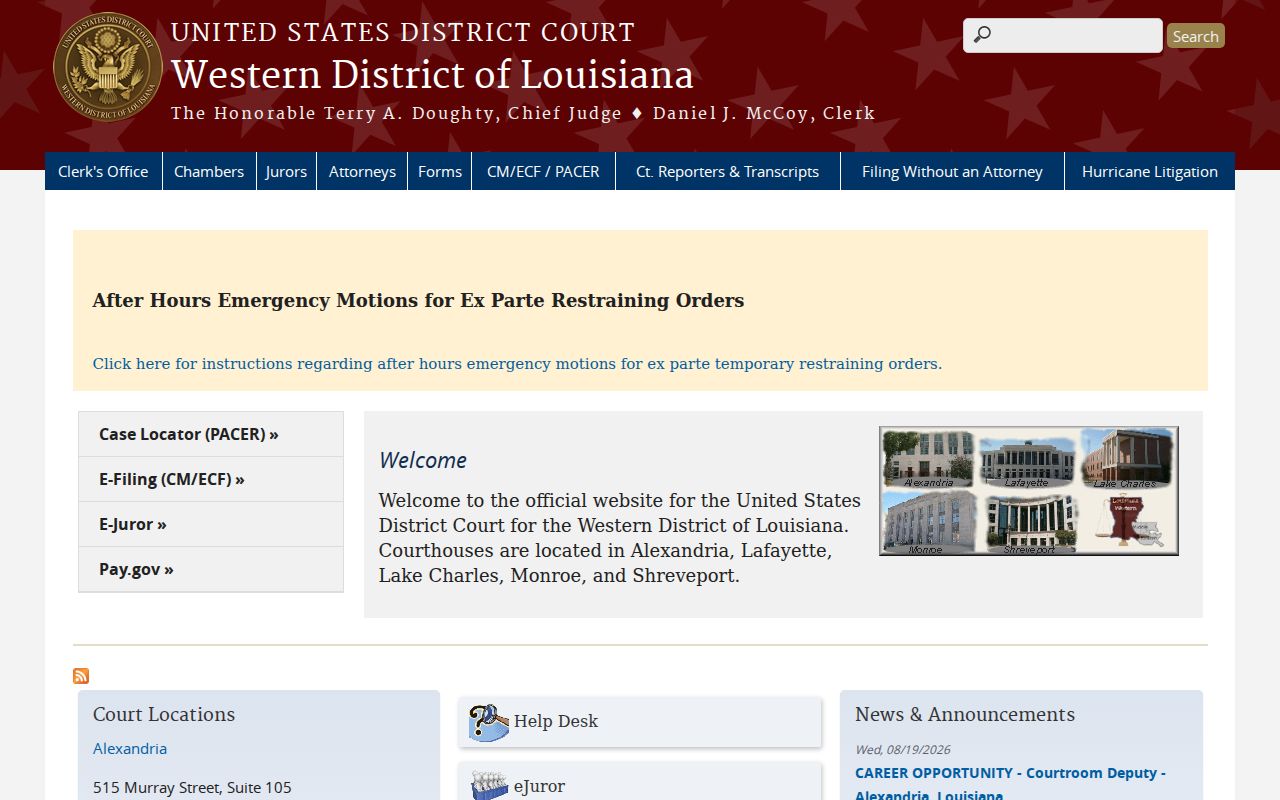
That federal route stands apart from the eClerks LA and Concordia clerk channels for state-court records.
Public Access and Sealed Records
Louisiana law generally lets you examine and copy public records during regular hours. The court-record custodian may certify copies. The right has real limits. Juvenile records, expunged matters, and sealed files may be withheld or redacted. So may protected family or adoption content and protected personal identifiers. A calendar label does not rule that every document in the file is public.
Key Rules:
La. C.C.P. art. 251 makes the clerk the court-record custodian and provides for public examination and certified copies unless an exception applies.
La. R.S. 44:31 gives adults a general right to examine, copy, reproduce, or obtain public records.
La. R.S. 44:32 requires a custodian to permit inspection during regular hours and state the legal basis for a withholding.
La. Ch.C. art. 412 protects juvenile records except where the Children’s Code authorizes disclosure.
Ask the clerk what access the law allows rather than asking for protected content. To locate the case before ordering, use the dedicated Concordia Parish case search route.
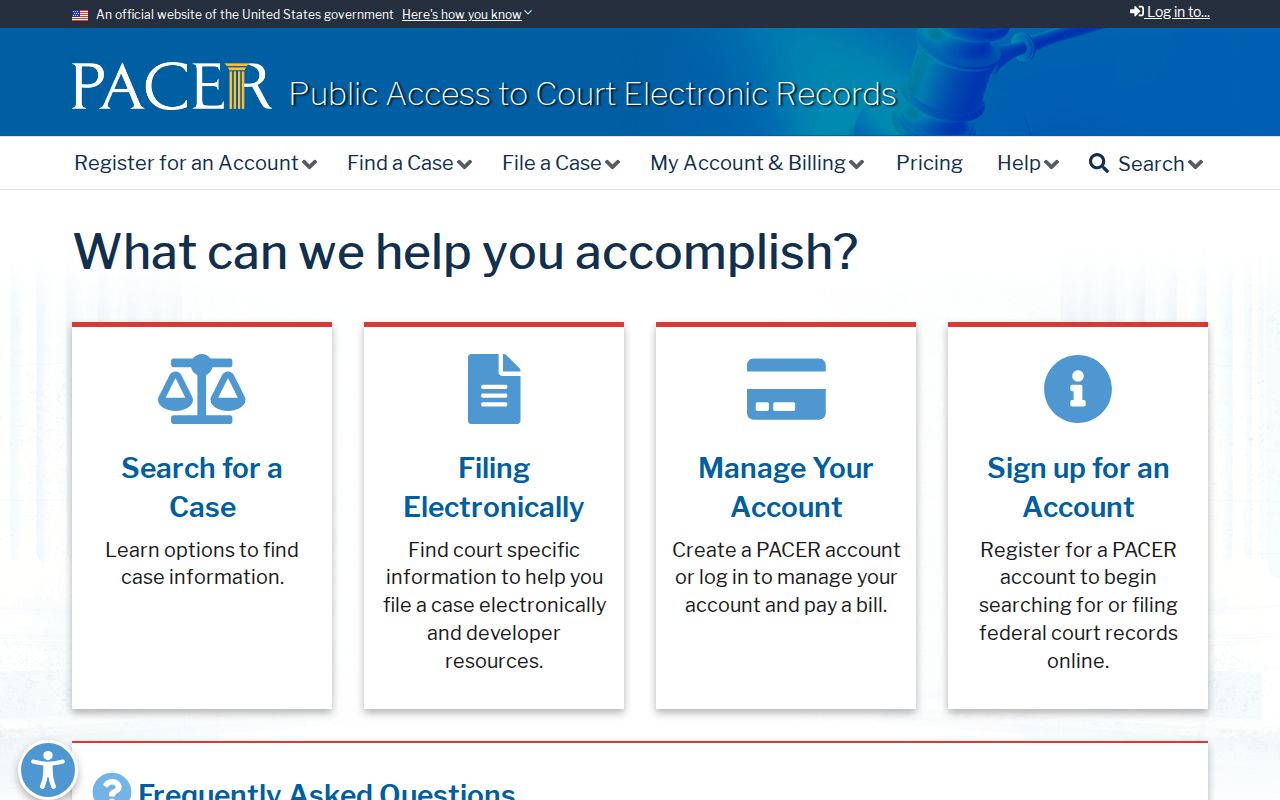
PACER shows how separate the federal access route is, while state-court certification stays with the Concordia Parish Clerk of Court.